How Much Is Your Home Worth?

BLOG
CONTACT US
Freedom Real Estate Group NW
License : #201226936
License #: 268528
150 7th St. Springfield, OR, 97477
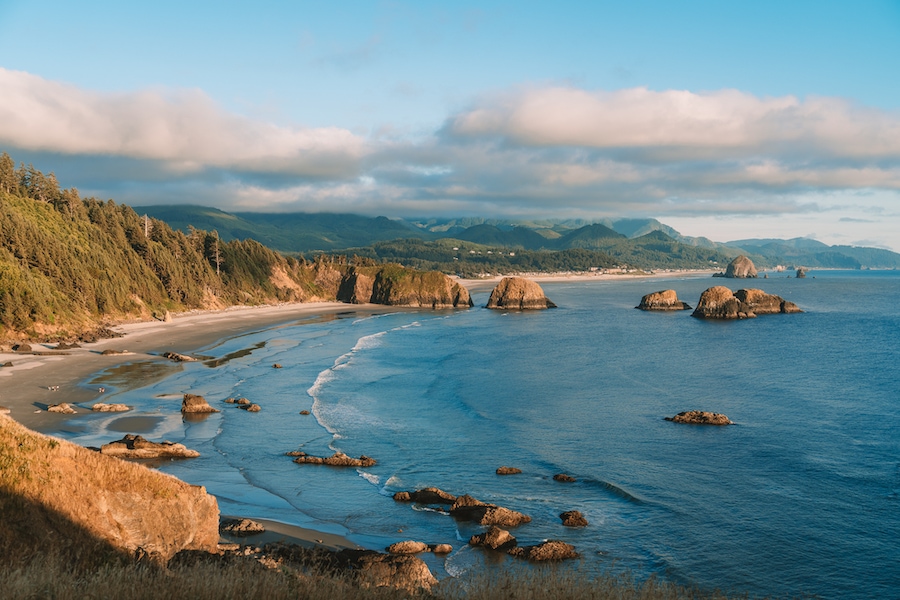
Oregon Coast Housing Market Update Spring 2026
Title:Oregon Coast Housing Market Update, Spring 2026
Meta description:Current home prices, inventory, rental regulations, and market conditions across the Oregon Coast, from Lincoln City and Newport down to Waldport and Florence. Real numbers and what they mean for buyers, sellers, and second-home owners.
URL slug:oregon-coast-market-update-spring-2026
The Oregon Coast is one of the most distinctive real estate markets in the state, and one of the most misunderstood. It doesn't follow the same patterns as the Willamette Valley, it doesn't follow national headlines, and it doesn't even follow itself consistently from one town to the next. Lincoln City, Newport, Waldport, and Florence can each be doing something different in the same month.
If you own property on the Coast, are thinking about buying here, or are weighing whether to sell, here's where the market actually stands going into spring 2026.
What makes the Coast different
Before we get into the numbers, it's worth saying that the Coast plays by different rules than inland markets.
A meaningful share of buyers are second-home or vacation buyers, not primary residents. That changes everything about how the market responds to interest rates, seasons, and the broader economy.
Short-term rental (STR) regulations vary widely by city and county and have been tightening across the Coast over the last several years. Long-term rental (LTR) demand has stayed strong as some properties shift out of the STR market. If you're buying with rental income in mind, you have to verify the rules at the specific address before you write the offer, not after.
Insurance is a real consideration. Wildfire, wind, flood, and (in some areas) erosion all factor in. Coverage is available, but it's not always cheap, and quotes can vary dramatically from one carrier to the next.
Inventory tends to be thinner and more variable than in Valley markets. A small number of sales can swing the median price meaningfully month to month, which is why looking at year-over-year and seasonal trends matters more than reacting to a single monthly number.
With that context in mind, here's what's happening city by city.
Lincoln City
Lincoln City is showing a wide spread depending on which data source you look at. Recent sales data shows median prices in the $426,000 range, while current listings are sitting at a median of around $545,000 with 110 active properties on the market. Days on market average 129. A typical three-bedroom starter home runs around $465,000.
Rental regulations:Lincoln City has one of the most restrictive STR programs on the Coast. The city caps STR licenses at 194 in the R1-5 zone and 91 in the R1-RE (Roads End) zone. Both caps have been reached, and no new licenses are being issued in those zones until existing license counts drop below the cap. Some commercial zones (general commercial, recreation commercial, Taft Village core, Nelscott business district, Oceanlake plan district, and the dedicated VR zone) still allow STRs as a permitted use. The transient lodging tax runs roughly 12% city plus 1.5% state. Long-term rentals are unrestricted and demand for quality long-term inventory has been strong as STR options have tightened.
What this means:Lincoln City has a clear gap between what's listed and what's actually selling. That gap usually points to a market where sellers are still anchored to peak pricing and buyers are not. For buyers, this is the kind of market where a well-positioned offer below asking has a real chance, especially on listings that have been sitting more than 60 days. For STR-focused investors, Lincoln City is essentially closed to new entries unless you're buying an existing licensed property in an eligible zone, and even then licenses don't always transfer. For sellers, pricing strategy matters more here than almost anywhere on the Coast right now.
Newport
Newport is the most active mid-Coast market and the most segmented. Site-built homes are averaging $778,000, up 2.8% from January, with inventory expanding 21% as the spring market opens up. Condos and townhomes are averaging $303,000. Manufactured homes with land start around $195,000. The broader median sale price across all property types ran $465,000 in February.
A typical three-bedroom starter home in Newport runs about $425,000. Days on market are around 87, meaningfully faster than this time last year, when it was 125.
Rental regulations:Newport uses a vacation rental overlay zone approach, which effectively limits new STR licenses to designated tourist-oriented areas of the city. The city also has a proximity requirement for owners, meaning a local presence (or a designated local representative) is part of the licensing process. Outside the overlay zones, new STRs generally aren't permitted in residential neighborhoods. Long-term rental demand in Newport is strong, partly because Newport has a meaningful working population (Oregon Coast Community College, Pacific Maritime and Heritage Center, Samaritan Pacific Communities Hospital, and the commercial fishing industry) that supports steady year-round rental occupancy.
What this means:Newport is one of the few Coast markets where you can find genuinely different price tiers within the same city. Premium oceanfront and ocean-view site-builts are commanding $700,000+ and selling. The condo and manufactured home segments give buyers entry points well below most Valley cities. The fact that days on market dropped from 125 to 87 year over year is a real signal that demand has firmed up here. For investors, Newport is more workable than Lincoln City for STRs but still requires careful zone verification.
Waldport
Waldport remains one of our favorite under-the-radar Coast markets. It sits between Newport and Florence, offers genuine ocean and bay access, and pricing tends to come in below either of those neighbors. Inventory is thin, typical for a smaller Coast town, but consistent buyer interest from retirees, second-home buyers, and remote workers keeps quality listings moving.
Rental regulations:Waldport currently has the most permissive STR policy of the major Coast cities. There's no cap on the number of licenses, though the city does require compliance with noise, occupancy, and parking standards along with the standard transient lodging tax collection. This is subject to change (Coast cities have been tightening STR rules steadily), so it's worth verifying current rules at the time of any purchase. Long-term rental demand is steady, particularly for properties priced for working families and retirees on fixed incomes.
What this means:Waldport pricing is more dependent on the specific property than on broad market averages. A well-located oceanfront or ocean-view home can move quickly. A property without a view, with deferred maintenance, or in a less-desirable pocket can sit for months. For STR investors specifically, Waldport is one of the few remaining Coast markets where licensing isn't already capped, which makes it worth a closer look if rental income is part of your plan. This is a market where local knowledge of which streets, which sections, and which property conditions actually move is worth a lot.
Florence
Florence has been one of the more interesting Coast stories in the last year. Median sale prices ran around $429,000 in early 2026, with year-over-year average sale prices up 19.7%. Days on market dropped 19.2% over the same period. List prices are running higher (around $520,000 to $542,000), and price per square foot has softened slightly.
Rental regulations:Florence doesn't currently have a dedicated STR ordinance, which makes it one of the more open markets on the Coast for vacation rentals. STR operators are required to register with the State of Oregon Department of Revenue, obtain a City of Florence business license, and collect the combined 9% transient lodging tax (4% city plus 5% Lane County). Accessory Dwelling Units (ADUs) cannot be used as STRs. The city has been actively working on more comprehensive STR regulations through 2025 and into 2026, so the current open environment is likely to change. Long-term rental demand in Florence is strong, supported by a growing retiree population and steady seasonal worker housing needs.
What this means:Florence is showing the classic signs of a market that's strengthening but not overheating. More homes are selling, they're selling faster, and prices are firming up, but list prices are still ahead of where actual sales are landing. For buyers, Florence offers some of the best Coast value in 2026, especially compared to Lincoln City and Newport. For STR investors, Florence is currently one of the better Coast options for new licensing, but the regulatory window may be closing, so timing matters. For sellers, this is a strong window if pricing is realistic.
Depoe Bay
Depoe Bay is its own thing. Tiny inventory, wide price ranges, and strong demand for the right oceanfront properties keep this market priced well above neighboring Lincoln City and Newport on a price-per-square-foot basis. Mobile home parks and condo properties offer some of the more accessible entry points here, but each comes with specific considerations (lot rent structures, subleasing rules under Oregon ORS 90, HOA dynamics) that have to be understood property by property.
Rental regulations:Depoe Bay took the strictest STR approach of any of the major Coast cities. STRs are restricted to commercially zoned properties, which effectively eliminates them from residential neighborhoods. If you're buying a single-family home in a residential zone in Depoe Bay, you generally cannot operate it as a vacation rental. Some condo properties operate under hotel licenses (often called condotels), and those operate under different rules. Long-term rental demand is steady but limited by the small size of the year-round population.
What this means:Depoe Bay rewards buyers who do their homework. There's no "average Depoe Bay home"; there are individual properties that are excellent values and individual properties that are overpriced, and the only way to tell the difference is to know the specific area and the specific zoning. STR investors should plan for commercial-zone properties only.
The forces shaping the Coast in 2026
A few things are driving Coast market behavior this year.
Mortgage rates in the low-to-mid 6% range are pulling some second-home buyers off the sidelines. Coast property is heavily affected by discretionary buying, so when financing math gets easier, the buyer pool grows quickly.
Insurance costs are becoming a bigger factor in offers. Buyers are getting quotes earlier in the process, and some are walking from properties where insurance comes back significantly higher than expected. We strongly recommend insurance shopping at the same time as offer writing, not at the closing table.
STR regulation continues to evolve. Lincoln City, Lincoln County, and Depoe Bay are tightly capped or restricted. Newport requires overlay-zone qualification. Florence is open today but actively building regulations. Waldport remains the most permissive but is reviewing its approach. If income from short-term rentals is part of your buying or selling story, get current with the specific city's rules at the time of the transaction, not based on what was true a year ago.
LTR demand has stayed steady across the Coast, partly because some properties have shifted out of the STR market and back into long-term inventory. For investors who want lower management overhead, the long-term rental side is genuinely worth considering on the Coast right now.
Migration is steady but selective. Out-of-state buyers (primarily from California, Washington, and Arizona) continue to look at the Coast for retirement, second homes, and remote-work primary residences. The Coast is still drawing people, but those buyers are more price-sensitive than they were two years ago.
What this means if you're buying
Don't rely on national headlines. The "housing market" you read about in the news is usually Portland, Seattle, or San Francisco. Coast pricing, inventory, and pace move on their own timeline.
Go in with insurance quotes and STR rules confirmed. These are the two most common surprises that derail Coast deals late in the process.
Be patient with inventory. The right house may not be on the market today. Coast inventory turns over more slowly than Valley markets, and the best properties often sell to buyers who were ready when they came up.
What this means if you're selling
Pricing reality matters more on the Coast than anywhere. A home priced 5% above market in the Valley might still sell. The same overpricing on the Coast can lead to 90+ days on market and meaningful price reductions. The Coast doesn't reward speculation; it rewards realism.
Marketing reach matters. A meaningful share of Coast buyers are not local. They're searching from the Valley, from out of state, or from second-home shopping platforms. A listing that only reaches local buyers is reaching a fraction of the actual market. This is one of the places where targeted digital marketing actually pays off.
Spring is the window. Coast buyer activity rises sharply in late February through July, and quality listings that come on early in that window benefit from less competition. By August, the market starts cooling for the year.
The bottom line
The Oregon Coast in spring 2026 is a market that rewards local knowledge. Lincoln City is buyer-friendly for the right negotiation but closed to new STR investors. Newport is segmenting into clearly different price tiers with workable but limited STR licensing. Florence is firming up and currently offers the most open STR environment, though that's likely to change. Waldport and Depoe Bay are property-specific markets where general averages don't tell the story, and they sit at opposite ends of the STR regulation spectrum.
Whatever Coast town you're focused on, the most important thing is grounded, current information about that specific market, not generic Oregon real estate headlines. If you want to talk through what your specific property is worth, what your budget gets you in a particular Coast town, or what STR or LTR potential a property actually has, we work the Coast every week and we're happy to help.
Reach out anytime. We're at 150 7th St in Springfield, or you can find the whole team at freedomrealtynw.com.




Disclaimer: All information contained on this website is deemed reliable but not guaranteed. All properties are subject to prior sale, change or withdrawal notice freedomrealtynw.com believes all information to be correct but assumes no legal responsibility for accuracy.